Clinical Experience
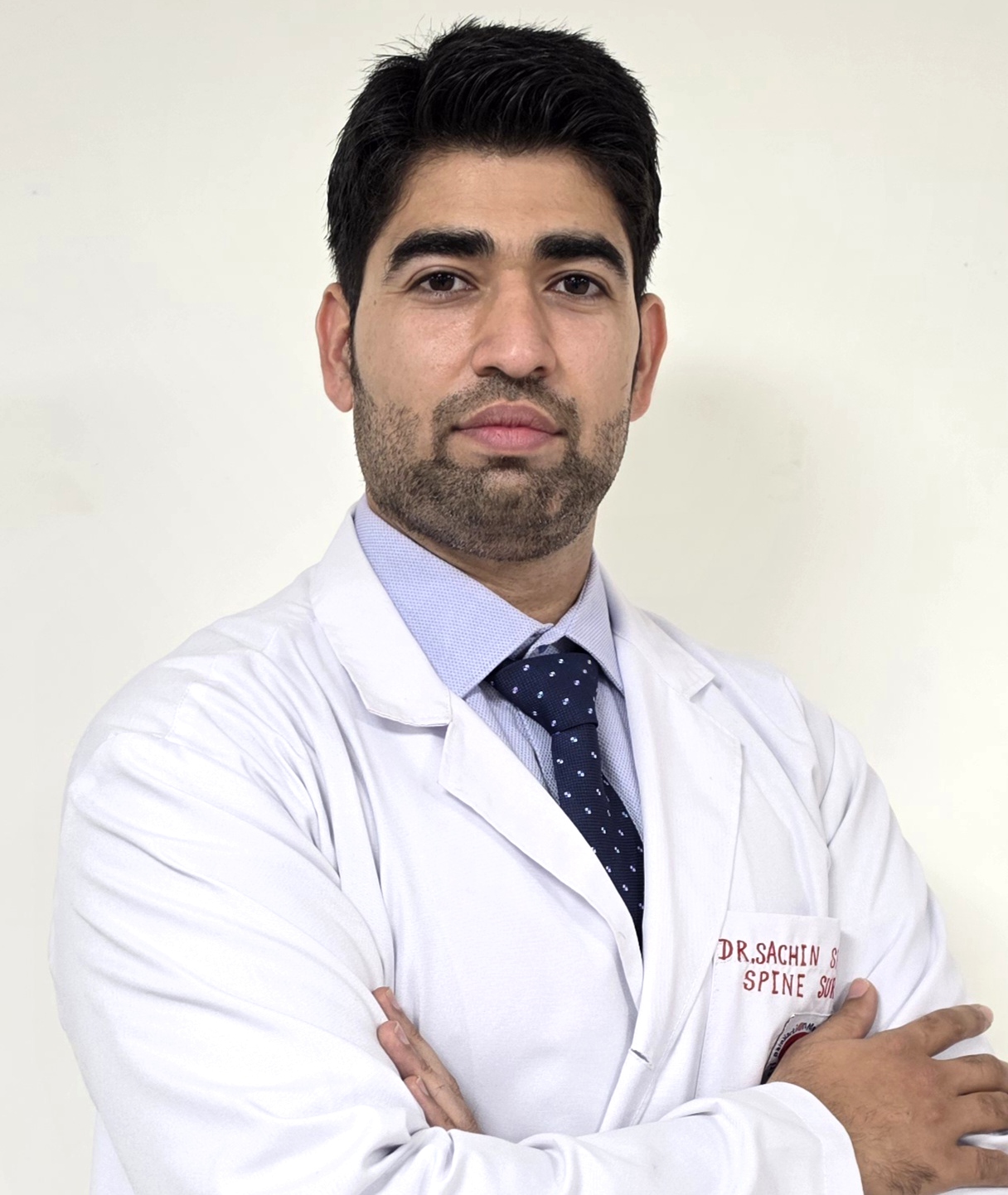
Dr. Sachin Sharma
Fellowship-Trained and National Board Certified Spine Surgeon
Robotic | Endoscopic | Minimally Invasive & Deformity Spine Surgery
Dr. Sachin Sharma is a fellowship-trained spine surgeon with over 12 years of experience in orthopaedics and spine care. He specializes in the comprehensive evaluation and treatment of spinal disorders, with particular expertise in robotic, endoscopic, minimally invasive and deformity spine surgery.
His clinical practice encompasses the management of both common and complex spinal conditions, including degenerative spine disorders, slipped discs, spinal stenosis, cervical myelopathy, spinal deformities, osteoporotic fractures, spinal infections and spinal tumors.
Experience & Expertise
12+ Years of Clinical Experience
Extensive experience in the evaluation and management of a wide range of spinal disorders, from common degenerative conditions to complex spinal pathology.
Fellowship-Trained in Spine Surgery
FNB – Spine Surgery, Indian Spinal Injuries Centre (ISIC), New Delhi. Specialized fellowship training in the management of complex spinal disorders and advanced spine surgery. AO Spine Fellowship from Royal National Orthopedic Hospital, London.
National Board Certified
National Board-certified specialist with dedicated training and clinical experience in spine surgery.
Advanced Surgical Expertise
Special interest in robotic, endoscopic, minimally invasive and spinal deformity surgery.
Qualifications
Government Medical College, Vadodara
Government Medical College, Vadodara
Indian Spinal Injuries Centre (ISIC), New Delhi
Royal National Orthopedic Hospital (RNOH), London
Philosophy of Treatment
"Spine treatment should begin with an accurate diagnosis and a clear understanding of the patient's symptoms, clinical findings and imaging. Not every patient with back or neck pain requires surgery."
Dr. Sharma believes that whenever appropriate, treatment begins with non-surgical measures such as medication, physiotherapy, rehabilitation, activity modification and lifestyle changes.
When surgery is indicated, the objective is to select the right procedure for the right patient, using contemporary surgical techniques and technology where they provide meaningful benefit.
Special Interest & Expertise
- Robotic and navigation technology-assisted spine surgery
- Endoscopic spine surgery
- Minimally invasive spine surgery
- Cervical and lumbar degenerative disorders
- Cervical myelopathy
- Spinal deformity surgery
- Scoliosis and kyphosis correction
- Complex spinal reconstruction
- Revision spine surgery
Patient-Centred Approach
Every patient is different. Age, symptoms, neurological status, imaging findings, activity level, general health and individual expectations all influence treatment decisions.
The goal is not simply to treat an MRI abnormality, but to understand the patient as a whole and recommend a treatment strategy that is appropriate, evidence-based and individualized.